

تفاصيل الاتصال:
+86 17852488518

Introduction: A Client Story That Impressed Me
Last summer, a lubricant business owner approached me. He purchased approximately 250,000 55-gallon 210-liter barrels annually at $22 each, totaling $5.5 million in expenses each year.
He asked me, "Is it worthwhile to build my own oil barrel making machine production line?"
I countered with, "Have you calculated the cost of making it yourself?"
He hesitated for a moment, then said he hadn't.
This is actually the most common situation I encounter—many factory owners know that steel barrel making machines are expensive, but they've never seriously considered whether "making it themselves" or "buying it from outside" is more cost-effective.
In this article, I'll use real data and case studies to help you clearly understand this cost-benefit analysis.
H2: Let's look at the big picture first—the market is rising, and if you don't act, you'll be left behind.
Before we get into the specifics, I think it's necessary to let you understand just how big this market is and where the trend is heading.
The global steel drum market was worth $10.06 billion in 2025 and is projected to grow to $19.72 billion by 2034, with a CAGR of 7.87%. The chemical and petroleum industries are the largest users, accounting for a significant share of demand. The Asia-Pacific region is the fastest growing market, accounting for 35.76% of the market share in 2025, mainly driven by the chemical and lubricant industries in China and India. The 55-gallon drum size is growing particularly fast, with a CAGR of 5.24% during the forecast period. Looking at downstream industries, petroleum and lubricants will account for 30.76% of the market share in 2026, followed closely by the chemical industry.
In simpler terms: this industry is still growing, and growing rapidly.
If you're still relying on purchasing steel drums from external suppliers, your profit margins are slowly being squeezed—upstream steel drum manufacturers won't consult you when raising prices, but your downstream customers won't easily accept such increases. Installing your own Steel Drum Production Line means taking control of the supply chain and putting your destiny in your own hands.
H2: In-house Manufacturing vs. Outsourcing—Five-Year Accounting Reconciliation
This is the part you're most concerned about. I'll use a real-world example to illustrate the figures.
Customer Situation: Annual demand is 250,000 standard 55-gallon steel drums, currently purchased at $22 each.
Option A: Continue Outsourcing
Annual expenditure is $250,000 multiplied by $22, equaling $5.5 million. Total expenditure over five years is $5.5 million multiplied by 5, equaling $27.5 million.
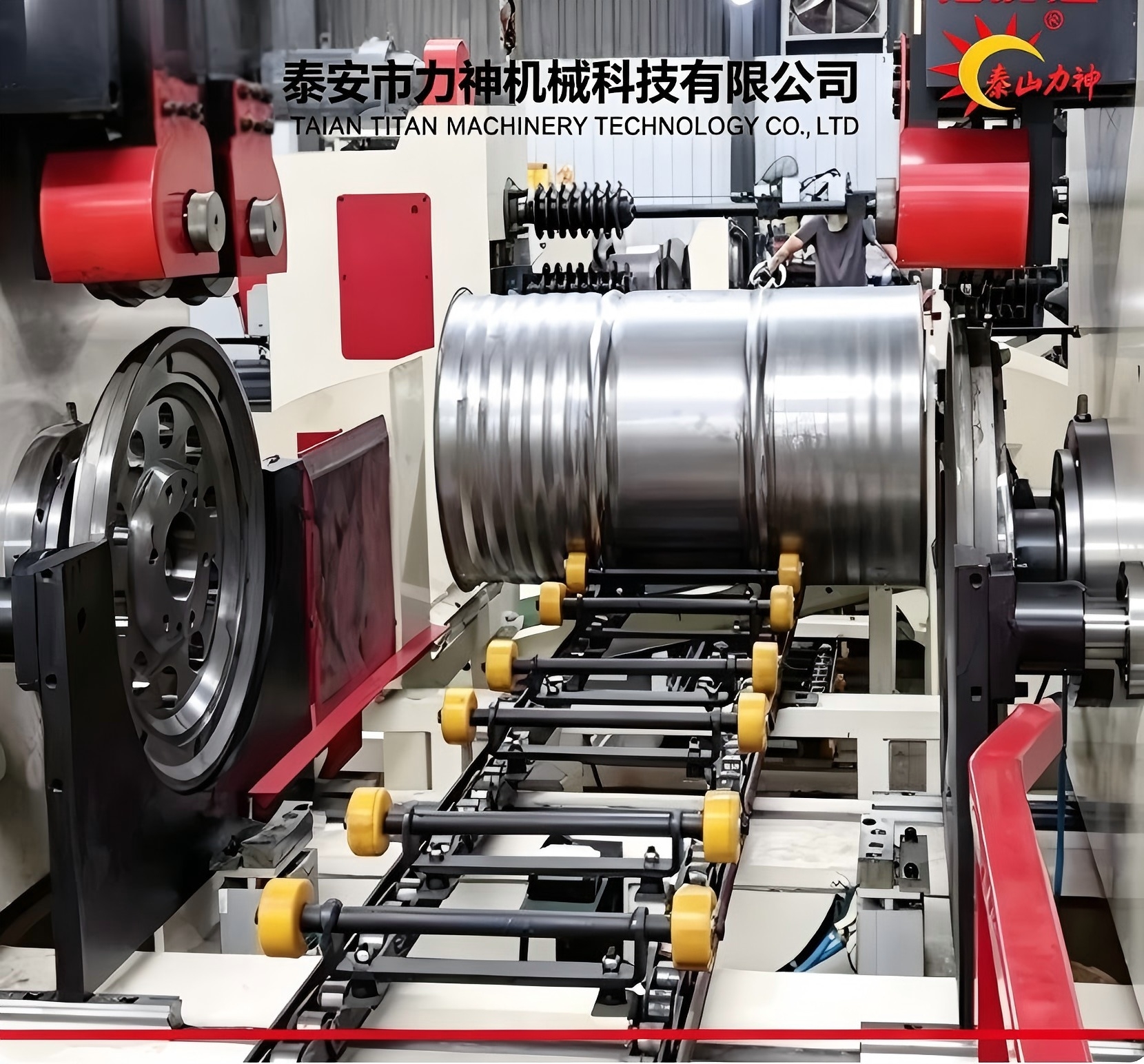
Option B: Self-built medium-speed production line (5 units per minute)
First, let's look at the initial investment (referencing publicly available industry quotes):
Steel drum production equipment (medium-speed line): $280,000 to $780,000
Installation and commissioning: $30,000 to $50,000
Factory renovation (if needed): $20,000 to $50,000
Initial raw material purchase: $50,000 to $100,000
The total initial investment is approximately between $380,000 and $980,000.
Let's look at the annual operating costs (based on an annual production of 250,000 units, data sourced from industry technical parameters and actual projects):
Steel raw materials: Approximately $10 to $12 per unit, annual cost $2.5 million to $3 million.
Electricity (medium-speed line, approximately 80 kW): Approximately $0.05 to $0.08 per unit, annual cost $12,500 to $20,000.
Labor (10 people): Approximately $0.50 to $0.80 per unit, annual cost $125,000 to $200,000.
Equipment maintenance: Approximately $0.05 to $0.10 per unit, annual cost $12,500 to $25,000.
Others (consumables, management fees, etc.): Approximately $0.30 to $0.50 per unit, annual cost $75,000 to $125,000.
The total cost per unit is approximately $11 to $13.50, with a total annual cost of approximately $2.725 million to $3.37 million.
Five-Year Comparison (Including Equipment Investment): The total expenditure for purchasing equipment externally over five years is $27.5 million, while the total expenditure for building equipment in-house over five years is approximately $14 million to $17.8 million. This results in savings of approximately $9.7 million to $13.5 million over five years.
See the difference? Nearly $10 million saved over five years. Even including the one-time equipment investment, the investment can be recouped in the first year, and the following four years are pure profit. This calculation is tempting to anyone.
Of course, this calculation has several prerequisites: First, your annual demand is consistently above 200,000 units; second, you have suitable factory buildings and power supply; third, you can find reliable equipment suppliers and experienced operating teams.
If your annual demand is below 100,000 units, external purchase is still more cost-effective. This is why I repeatedly emphasized in the first article, "Calculate production volume before choosing equipment."
H2: Comparison of Investment Return Cycles for Different Speed Production Lines The investment return cycles for steel drum production equipment vary greatly depending on the speed. Let me give you a direct comparison (based on publicly available industry quotes and operating cost estimates):
Low-speed line (1-2 units per minute) – Investment of $30,000 to $380,000, annual capacity of approximately 100,000 units, cost per unit of approximately $14-16, annual savings of approximately $600,000 to $800,000 compared to outsourcing, payback period of approximately 0.5 to 1 year.
Medium-speed line (5 units per minute) – Investment of $280,000 to $780,000, annual capacity of approximately 300,000 units, cost per unit of approximately $11-13.5, annual savings of approximately $2.5 million to $3.3 million, payback period of only 0.3 to 0.5 years, or less than half a year, a very fast payback period.
High-speed line (7-8 units per minute) – Investment of $1 million to $5 million, annual capacity of approximately 500,000 units, cost per unit of approximately $9-11, annual savings of approximately $5.5 million to $6.5 million, payback period of approximately 0.5 to 1 year.
Did you notice the pattern? The payback period for medium-speed lines is the fastest—the investment isn't as high as for high-speed lines, but the cost advantage is already very significant, and the production capacity is sufficient to cover the needs of most medium-sized factories. This is the fundamental reason why most of my clients ultimately choose medium-speed lines—the highest cost-effectiveness, lowest risk, and fastest profit.
H2: Key ROI Data for Different Speeds
I have compiled the key investment and return data for the three lines below for your convenience (data source: publicly available industry quotes and manufacturer information):
Regarding investment amount—Low-speed lines: $30,000 to $380,000; Medium-speed lines: $280,000 to $780,000; High-speed lines: $1 million to $5 million.
Regarding annual production capacity—Low-speed lines: approximately 100,000 units; Medium-speed lines: approximately 300,000 units; High-speed lines: approximately 500,000 units.
Regarding unit cost—Low-speed lines: $14 to $16; Medium-speed lines: $11 to $13.5; High-speed lines: $9 to $11.
Regarding annual savings compared to outsourcing: $600,000 to $800,000 for low-speed lines, $2.5 million to $3.3 million for medium-speed lines, and $5.5 million to $6.5 million for high-speed lines.
Regarding payback period: 0.5 to 1 year for low-speed lines, 0.3 to 0.5 years for medium-speed lines, and 0.5 to 1 year for high-speed lines.
H2: Five Pitfalls in Equipment Selection – I've Avoided Them for You
Over the years, I've seen more pitfalls in the steel drum production equipment industry than you imagine. I'll share five of the most common ones with you, hoping you won't repeat their mistakes:
Conclusion
Returning to the lubricant oil company owner's question at the beginning: "Is it worthwhile to build your own production line?"
My answer is: If your annual demand exceeds 200,000 drums and you plan to stay in this industry long-term, building your own production line is definitely worthwhile. Saving nearly $10 million over five years is a win-win situation.
But the prerequisite is – choosing the right equipment, choosing the right supplier, and good planning.
Steel drum production equipment is not a fast-moving consumer good; it's an investment with a minimum ten-year term. Spending three months carefully selecting the right equipment is far better than rushing into an order and regretting it for three years.
At Taian Lishen Machinery Technology, my daily work involves helping clients calculate costs and choose the right equipment. If you have specific projects you'd like to discuss or would like to visit our production line, please feel free to contact me anytime.
Having worked in this industry for almost thirty years, my greatest sense of accomplishment isn't about how many machines I've sold, but seeing my clients genuinely make money using our equipment.


يستخدم هذا الموقع ملفات تعريف الارتباط لضمان حصولك على أفضل تجربة على موقعنا.


 English
 Español
 Pусский
 Français



 هاتف
هاتف
تعليق
(0)