

تفاصيل الاتصال:
+86 17852488518

Product Overview
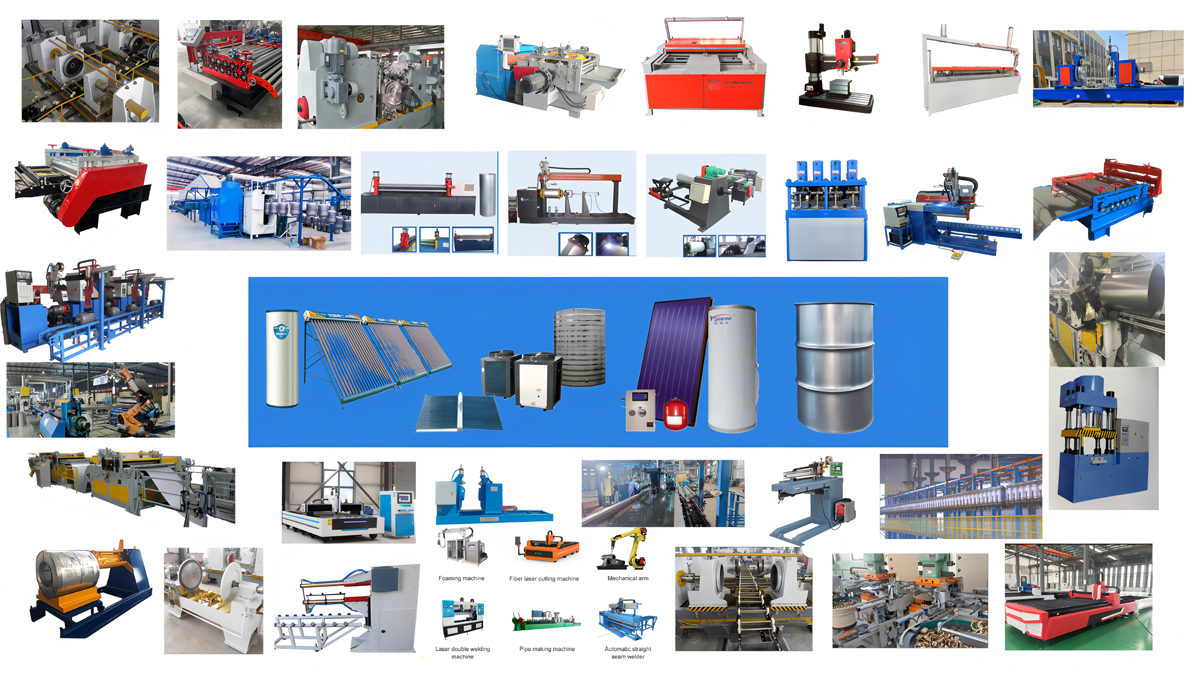
The Steel Drum Production Line dryer is an essential supporting equipment after spraying, painting, and baking processes. It is mainly used for the rapid drying, curing, and shaping of the coating on the surface of steel drums. It is suitable for the continuous production of 200L steel drums, chemical drums, lubricating oil drums, paint drums, and various metal packaging containers. The equipment adopts a hot air circulation heating system and intelligent PLC temperature control technology, ensuring uniform and precise temperature control within the furnace. The drying temperature, conveyor speed, and residence time can be adjusted according to different coating processes to ensure sufficient curing, strong adhesion, and uniform surface gloss of the paint film. The entire machine can be heated by electricity, natural gas, diesel, or other gas, offering advantages such as energy saving, environmental protection, high thermal efficiency, stable operation, and convenient maintenance. The dryer is equipped with an automatic conveying system, allowing seamless connection with spraying lines, cooling lines, conveyor lines, and the entire steel drum production line. It meets the needs of medium- and high-speed automated production, providing customers with efficient and stable steel drum surface treatment solutions.


Let me tell you a quick story that changed how I think about steel drum production. I was visiting a factory that had just
installed a brand-new spray booth. The paint looked great coming out of the guns. The operators were experienced. The
paint itself was top-quality. But the drums kept failing the scratch test. The paint would chip off way too easily. It turned out
the curing oven wasn't holding the right temperature long enough. The paint looked dry on the outside, but underneath,
the solvents were still trapped. That's when I learned that the drying oven is just as important as the spray booth itself.
Here's the thing about steel drum curing. When you spray paint onto a steel drum, you're not just putting color on metal.
You're applying a liquid coating that needs to go through a chemical transformation to become a solid, protective film. That
transformation only happens at the right temperature, for the right amount of time. If the paint doesn't cure properly, it
won't bond to the steel. It'll chip, peel, or rust through in months instead of years. And that's exactly why your steel drum
drying machine is non-negotiable.
The curing process happens in several stages. First, the drums enter the oven and the temperature gradually rises. This is
called the升温阶段, where the solvents in the paint start to evaporate. Then comes the holding stage, where the temperature
stays steady and the paint chemically cures. Finally, the drums cool down before they leave the oven. Each stage needs to
be carefully controlled. If the temperature rises too fast, the paint can bubble or blister. If it doesn't hold long enough, the
paint won't fully cure.
Most modern steel drum ovens use hot air convection heating. That means heated air is blown through the oven and
circulates around the drums. Some designs use special injection nozzles that create a strong air circulation between the
drums, which improves heat transfer and speeds up the heating process. Temperature accuracy is critical. For most steel
drum paints, the oven temperature needs to stay between 100°C and 180°C, with the total drying time ranging from 20 to 50
minutes depending on the paint type.
When you're choosing a drying oven, you've got a few configuration options. Single-row ovens are simpler and cheaper.
Multi-row ovens can process more drums at once and are more space-efficient. Double-tunnel ovens are a step up—they
can cure inside-lined and outside-painted drums simultaneously in separate tunnels. For drum lids (tops and bottoms), you
might need a different setup called a wicket oven, where the flat sheet-metal parts are carried through the oven on long
carriers.
One detail that's easy to overlook: cooling after curing. If the drums come out hot and you close them up right away, the air
inside cools and creates a vacuum. That vacuum can make the drum hard to open at the filling station or even collapse the
drum itself. A good curing line includes a cooling section that brings the drum temperature down before it goes to the
closing station.
Here are a few practical tips I've picked up from working with steel drum ovens. First, pay attention to the air purification
system. If you're using solvent-based paints, the oven exhaust contains VOCs that need to be treated. Some systems use a
regenerative thermal oxidizer that both cleans the exhaust and recovers heat to power the oven. That can cut your fuel costs
significantly. Second, check the conveyor system. If your drums are being transported through the oven on chains, make
sure the chains are properly maintained. A chain failure in the middle of an oven is a nightmare to fix. Third, invest in good
temperature monitoring. You want sensors at multiple points in the oven so you can spot hot or cold zones before they
affect your quality.
Your steel drum drying machine may not be the most glamorous piece of equipment on your line, but it's the one that turns
a painted drum into a finished product that will last for years. A good paint job cured badly is still a bad paint job. And in this
industry, that's a reputation you don't want to build.


يستخدم هذا الموقع ملفات تعريف الارتباط لضمان حصولك على أفضل تجربة على موقعنا.


 English
 Español
 Pусский
 Français



 هاتف
هاتف