

تفاصيل الاتصال:
+86 17852488518

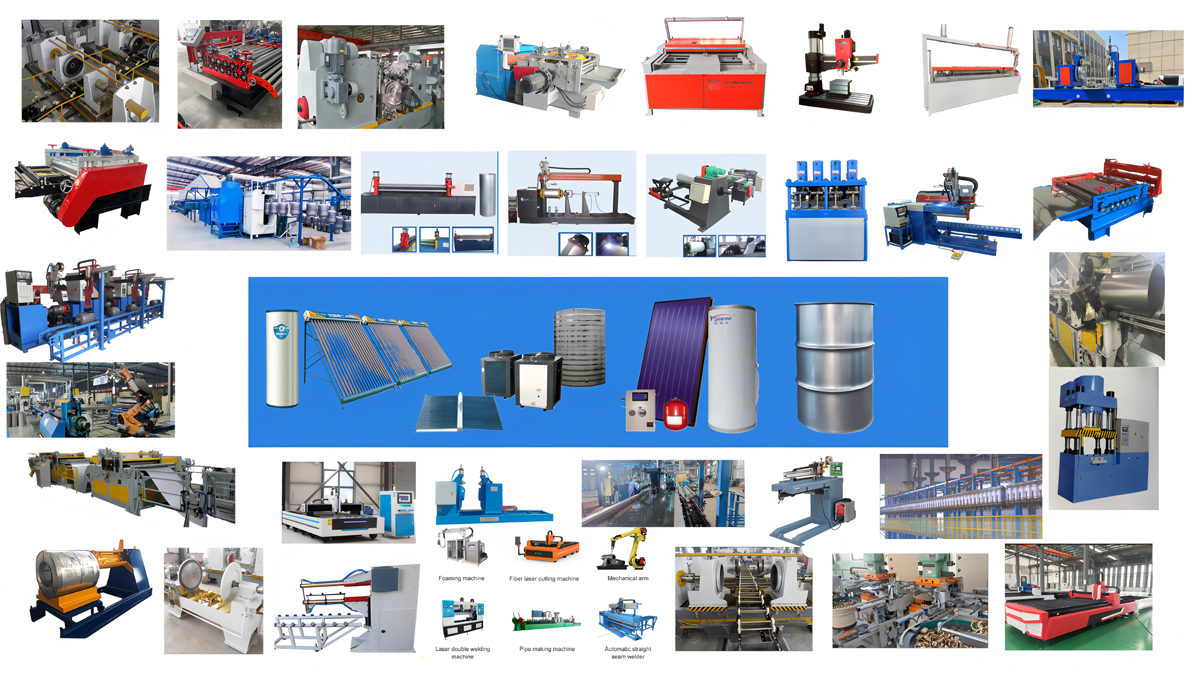
Product Overview
A sealing machine is a key piece of equipment on a Steel Drum Production Line, assembling the drum body and bottom cover
together. Its core principle is to apply pressure to the flange of the drum body and the edge of the bottom cover using sealing
rollers. Through initial and final rolling processes, they are firmly interlocked, forming a tight rolled edge structure. This
process relies on the plastic deformation of the metal, not welding or gluing.
The most common sealing methods for steel drums are double-rolled and triple-rolled edges. Double-rolled edges involve
five layers of sheet metal interlocking, and most closed-top steel drums use this method. Triple-rolled edges involve seven
layers of sheet metal interlocking, offering higher strength and are mainly used on open drums subjected to high-strength
transport.
Depending on production needs, sealing machines can be equipped with single-head or double-headed machines.
Single-headed sealing machines are suitable for small to medium batch production, while double-headed sealing machines
can seal both ends of the drum body simultaneously, offering higher efficiency and being the preferred choice for large-scale
production. A good sealing machine needs to ensure a tight, leak-free rolled edge while preventing drum body deformation,
which directly determines whether the steel drum can pass subsequent drop and leakage tests.


The One Machine That Decides If Your Steel Drum Will Leak or NotYou know that sinking feeling when a customer calls and says your drums are leaking? I've heard that story more times
than I'd like to count. And in almost every case, the problem traced back to one piece of equipment: the steel drum
seaming machine.
Here's why. A steel drum isn't a single piece of metal. It's three pieces—the cylindrical body, the bottom lid, and the top
lid—joined together at the ends. And they're not welded together. They're seamed. The seaming machine takes the curled
edge of the lid and the curled edge of the drum body and rolls them together, forming a tight, interlocked joint that keeps
whatever's inside from spilling out. Get this wrong, and your drum fails the drop test or the hydraulic pressure test. Get it
right, and your customer never has to think about it.
So what should you actually look for in a steel drum seaming machine for your production line? The two biggest things are
he type of seam and the level of automation.
Double Seam or Triple Seam—What's the Difference?The seaming process usually happens in two passes: first a rough seam, then a tighter finishing seam. That's where the term
"double seaming" comes from—it's five layers of metal rolled together. It's the industry standard for most closed-top steel
drums. Then there's triple seaming, which uses seven layers of metal. It gives you a stronger, more leak-proof joint, especially
important for drums carrying hazardous materials or heavy liquids. The trade-off? It takes more material and complicates the
seaming process. So if your drums are going to be stacked high or shipped rough, triple seaming is worth the extra cost.Manual vs. Fully Automatic: Which One Fits?This is the big question. A semi-automatic seaming machine is cheaper and easier to maintain. It works fine for smaller
operations doing maybe 50 to 120 drums per hour. But if you're running a serious production line, you need a fully automatic
seaming machine. Here's why: an automatic seamer with PLC control and servo-driven rollers can hold a seaming tolerance of
less than 0.05 millimeters. That's the difference between a drum that seals every time and one that develops micro-leaks after
a few weeks in storage.
One more thing: look for a double-sided configuration if you're producing high volumes. A double-sided seaming machine
works both ends of the drum at the same time, which can push your output to 5 or 6 drums per minute with just one operator.
The single-sided ones are fine for short runs, but they'll bottleneck you fast if demand picks up.
At the end of the day, your Steel Drum Seaming Equipment isn't just another machine on the floor. It's the last line of defense
between your product and a very messy complaint. Pick one that gives you consistent, precise seams, and you'll sleep better
at night knowing your drums aren't coming back.
 RELATED
 RELATED


يستخدم هذا الموقع ملفات تعريف الارتباط لضمان حصولك على أفضل تجربة على موقعنا.


 English
 Español
 Pусский
 Français



 هاتف
هاتف