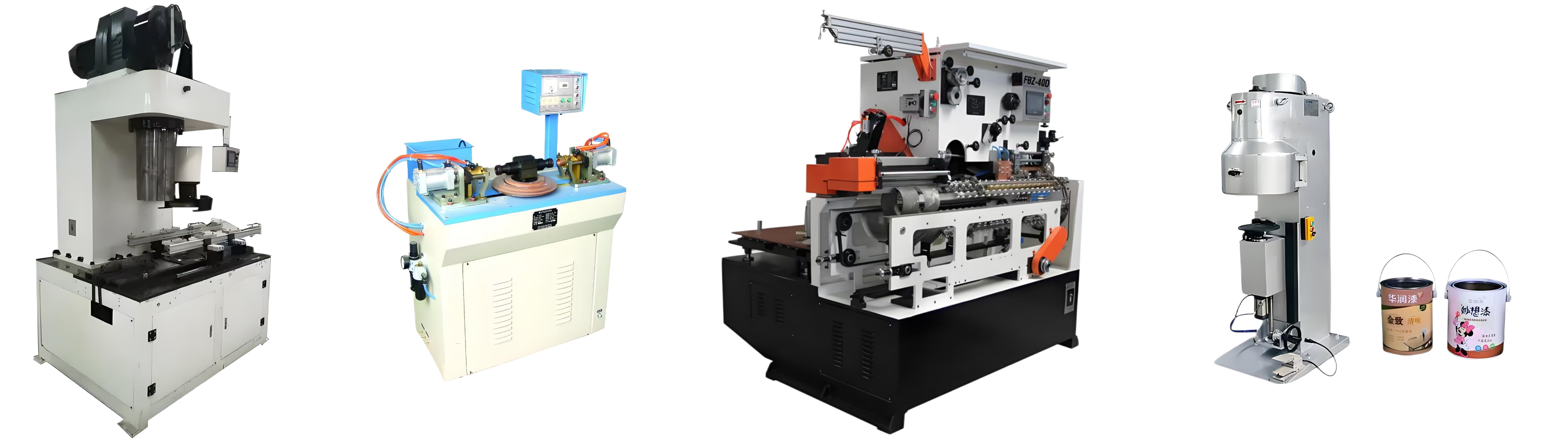
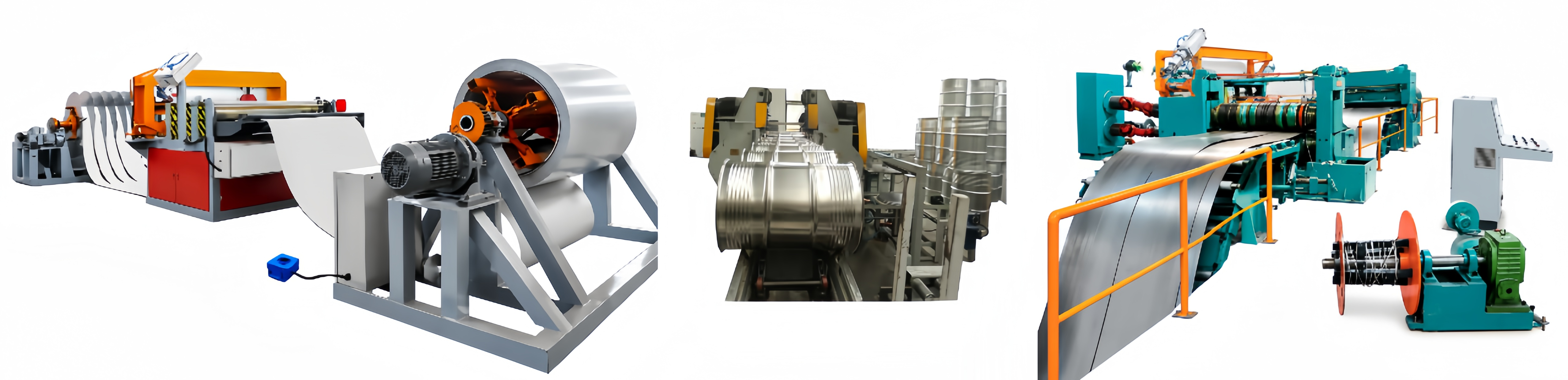
As global demand for sustainable, barrier-efficient packaging continues to rise, tin cans remain one of the most reliable and recyclable packaging solutions for food, beverage, chemical, and industrial products. Unlike plastic and paper alternatives, tinplate containers offer superior heat resistance, airtight sealing, and long-term preservation performance, driving steady growth in the metal packaging industry. This expanding market has raised higher standards fortin can manufacturing equipment, which defines production efficiency, product consistency, and final packaging quality. Modern can-making lines have evolved from simple mechanical devices into highly integrated automated systems, forming the core foundation of commercial tin can mass production.

Tin can manufacturing equipment mainly targets two mainstream product structures: two-piece drawn-and-ironed cans and three-piece welded cans, covering round, square, and irregular-shaped tin containers. The core production materials adopted by standardized equipment are food-grade electrolytic tinplate and chromium-free tin-free steel (TFS), featuring anti-corrosion coating compatibility and excellent ductility. The complete manufacturing workflow consists of automated material uncoiling, precision blank cutting, body forming, high-frequency welding, internal and external coating curing, flanging, double seaming, and vacuum leak testing. Each equipment module is precisely synchronized to eliminate dimensional errors and structural defects in finished cans.
Multiple critical factors determine the operational quality and output stability of tin can manufacturing equipment. First, cutting precision of servo-driven blanking machines directly affects subsequent welding seam uniformity; tiny dimensional deviations will cause weak sealing or leakage risks. Second, high-frequency welding system stability is pivotal, as inconsistent current parameters lead to uneven weld lines and reduced can body pressure resistance. Third, temperature control of coating curing equipment matters greatly—improper temperature will damage the protective coating, causing oxidation and contamination of packaged goods. Additionally, mechanical synchronization speed between seaming and forming modules must match production pace to avoid can body deformation.
Professional supplier selection is essential for stable long-term operation of can-making production lines. Reliable equipment suppliers must deliver integrated solutions covering mechanical precision, electrical control systems, and after-sales calibration services. Core selection criteria include equipment operational stability, compatibility with different tinplate thicknesses, energy consumption level, and customization capability for special-shaped cans. Qualified suppliers also provide standardized debugging processes and regular component maintenance guidance, which effectively reduces production failure rates and extends equipment service life.
Despite mature industrial application, the tin can manufacturing equipment sector still faces prominent industry pain points. Traditional semi-automatic lines rely on manual intervention for defect inspection, resulting in low efficiency and high error rates. High-speed automated equipment usually requires high initial investment, creating entry barriers for small and medium packaging manufacturers. Moreover, long-term high-load operation easily causes wear of forming dies and welding components, leading to gradual production precision degradation and increased maintenance costs. In addition, frequent material specification adjustments require flexible equipment adaptation, which many conventional production lines cannot support efficiently.
Tin cans produced by advanced manufacturing equipment are widely applied in diverse scenarios. In the food industry, high-precision sealed cans are used for canned fruits, vegetables, and ready-to-eat meals to extend shelf life without chemical preservatives. In the chemical industry, thick-wall tin containers manufactured by professional equipment safely store paint, lubricants, and aerosol products. Daily commodity packaging such as tea tins and gift cans also adopts refined can-making equipment to ensure uniform appearance and structural durability. Industrial practice proves that standardized equipment production effectively reduces packaging safety risks and improves product market competitiveness.

Looking ahead, tin can manufacturing equipment presents three clear development trends. First, intelligent digitalization is accelerating, with AI visual inspection and real-time data monitoring modules being embedded into production lines to realize automatic defect identification and parameter adjustment. Second, energy-saving and low-carbon optimization has become a core upgrade direction; new-generation equipment reduces heat loss in curing processes and lowers overall power consumption. Third, flexible modular design is gradually popularized, enabling one production line to switch between multiple can types and specifications to meet personalized market orders. These technological upgrades will further promote the high-quality development of the metal packaging industry.
In conclusion, tin can manufacturing equipment is a systematic engineering system integrating precision machinery, automatic control, and material technology. Its technological iteration and quality improvement directly drive the upgrading of metal packaging products. As market demands for safety, sustainability, and customization increase, intelligent, efficient, and flexible can-making equipment will become the mainstream choice of the industry, supporting the sustainable development of the global tin packaging supply chain.
Tin Can Manufacturing Equipment Core Technical Parameters
| Parameter Category | Parameter Name | Parameter Specification | Notes |
|---|
| Applicable Specification | Applicable Barrel Diameter | φ350~600mm | Standard specifications: φ560/571.5mm |
| Applicable Specification | Applicable Barrel Height | 250~1000mm | Standard specifications: 810~950mm |
| Applicable Specification | Applicable Sheet Thickness | 0.5~1.5mm | Maximum thickness of 2.5mm available for partial models |
| Applicable Specification | Rib Height | 15~25mm | Stepless adjustable |
| Core Performance | Hydraulic Working Pressure | 7~12MPa | Main drive system pressure |
| Core Performance | Pneumatic System Pressure | 0.3MPa | Auxiliary action system pressure |
| Core Performance | Production Efficiency | Double-sided model: 400~600 pieces/hour; Single-sided model: 200 pieces/hour | Tested with standard specification sheets |
| Power & Electrical | Motor Power | 11kW~30kW | Exact value adjusted according to equipment model and processed sheet thickness |
| Power & Electrical | Power Supply | 380V / 50Hz, three-phase | Industrial alternating current |
| Equipment Basic Info | Overall Dimensions | Approx. 4000×800×1600mm | Length × Width × Height, excluding external connecting pipelines |
| Equipment Basic Info | Net Weight | Approx. 5000kg | Based on standard configuration model |