تسجيل الدخول | يسجل
مقدمات الشركة
منزل > بطاقة > ماكينة لف الصفائح

ماكينة لف الصفائح

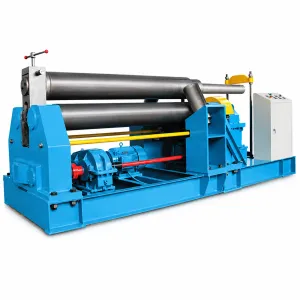
A plate rolling machine is a heavy-duty industrial machine used to bend and form flat metal plates into cylindrical, conical, or other curved shapes. It is widely applied in metal fabrication, shipbuilding, pressure vessel manufacturing, construction, and the production of tanks, pipes, and structural components. By passing a metal sheet or plate through a set of rollers, the machine gradually applies pressure and creates a controlled curve without damaging the material.

The basic structure of a plate rolling machine usually includes three or four rollers, a hydraulic or mechanical drive system, a control panel, and a strong frame to support large loads. The rollers are the most important working parts. They rotate and press the plate into the required shape. Depending on the machine design, the top roller or side rollers can move up and down or tilt to adjust the bending radius. This allows the operator to produce different curvature sizes with high accuracy.

Plate rolling machines are available in various models and capacities to handle different thicknesses and widths of metal plates. Light-duty machines are suitable for thin sheets and small workshops, while heavy-duty machines are designed for thick plates and large industrial projects. Common materials processed by these machines include carbon steel, stainless steel, aluminum, and other metal alloys. With the proper setup, the machine can form round tanks, cones, shells, and other complex parts used in industrial production.

One of the major advantages of a plate rolling machine is its ability to improve productivity and reduce manual labor. Compared with traditional hand-bending methods, it offers greater precision, consistency, and efficiency. It also helps minimize material waste and improves the quality of the final product. Modern machines often feature digital controls, automatic positioning, and safety devices, making them easier and safer to operate.

In addition to performance, durability and stability are key factors in plate rolling machine design. Since the machine works under high pressure, its frame and components must be made from strong materials and engineered for long service life. Regular maintenance, such as lubrication, inspection of rollers, and checking hydraulic systems, is necessary to ensure reliable operation and prevent breakdowns.

In conclusion, a plate rolling machine is an essential tool in modern metalworking. It combines strength, precision, and versatility to meet the needs of many industries. Whether used for small-scale fabrication or large industrial manufacturing, it plays an important role in forming metal plates into practical and accurate curved shapes.

نتاج

تصنيف:
طريقة العرض:
  • ماكينة لف الصفائح

    ماكينة لف الصفائح

    تصنيفها: خط انتاج اسطوانات الغاز
    المشاهدات: 272
    عدد:
    وقت الإصدار: 2026-06-08 19:49:18
    1. دقة التزامن ±0.2 مم: التحكم الإلكتروني في التوازن لبكرات العمل يضمن عدم الانحراف أثناء التدحرج على المدى الطويل، مع وجود خطأ دائري أقل من أو يساوي 1 مم.
    2. التشكيل لمرة واحدة أقل من دقيقتين: الدرفلة الأوتوماتيكية بالكامل باستخدام الحاسب الآلي، لا حاجة للعكس (أربع لفات)، مما يزيد من كفاءة الإنتاج بنسبة 50% - 80% مقارنة بثلاث لفات.
    3. الحد الأدنى من الحافة المستقيمة المتبقية بعد الثني المسبق: يشتمل الهيكل ذو الأربع بكرات على الثني المسبق، مما يلغي الحاجة إلى المعدات المساعدة أو عكس الصفائح المعدنية، وتوفير العمليات.
    4. تقليل استهلاك الطاقة بنسبة 35%: تعمل تقنية المحرك الكهربائي على تقليل استهلاك الزيت بنسبة 70% والضوضاء بمقدار 10-15 ديسيبل، مما يؤدي إلى انخفاض تكاليف التشغيل.
    5. 42CrMo Forging Rolls: المعالجة بالتلطيف والتبريد تضمن المتانة مدى الحياة؛ يعمل تلدين الإطار على تخفيف الضغط، ويمنع التشوه على المدى الطويل.
    6. القدرة على التشكيل المرن: يمكن برمجة الأجزاء غير المنتظمة الأسطوانية والمخروطية والقوسية ومتعددة الانحناءات دفعة واحدة، وقابلة للتكيف مع المواد الخاصة (الفولاذ المقاوم للصدأ، لوحة الألومنيوم).
  • ماكينة لف الصفائح

    ماكينة لف الصفائح

    تصنيفها: خط انتاج اسطوانات الغاز
    المشاهدات: 146
    عدد:
    وقت الإصدار: 2026-06-22 15:01:06
    1. دقة التزامن ±0.2 مم: التحكم الإلكتروني في التوازن لبكرات العمل يضمن عدم الانحراف أثناء التدحرج على المدى الطويل، مع وجود خطأ دائري أقل من أو يساوي 1 مم.
    2. التشكيل لمرة واحدة أقل من دقيقتين: الدرفلة الأوتوماتيكية بالكامل باستخدام الحاسب الآلي، لا حاجة للعكس (أربع لفات)، مما يزيد من كفاءة الإنتاج بنسبة 50% - 80% مقارنة بثلاث لفات.
    3. الحد الأدنى من الحافة المستقيمة المتبقية بعد الثني المسبق: يشتمل الهيكل ذو الأربع بكرات على الثني المسبق، مما يلغي الحاجة إلى المعدات المساعدة أو عكس الصفائح المعدنية، وتوفير العمليات.
    4. تقليل استهلاك الطاقة بنسبة 35%: تعمل تقنية المحرك الكهربائي على تقليل استهلاك الزيت بنسبة 70% والضوضاء بمقدار 10-15 ديسيبل، مما يؤدي إلى انخفاض تكاليف التشغيل.
    5. 42CrMo Forging Rolls: المعالجة بالتلطيف والتبريد تضمن المتانة مدى الحياة؛ يعمل تلدين الإطار على تخفيف الضغط، ويمنع التشوه على المدى الطويل.
    6. القدرة على التشكيل المرن: يمكن برمجة الأجزاء غير المنتظمة الأسطوانية والمخروطية والقوسية ومتعددة الانحناءات دفعة واحدة، وقابلة للتكيف مع المواد الخاصة (الفولاذ المقاوم للصدأ، لوحة الألومنيوم).
  • Steel Drum Rolling Machine

    Steel Drum Rolling Machine

    تصنيفها: خط إنتاج طبل الصلب
    المشاهدات: 108
    عدد:
    وقت الإصدار: 2026-07-06 14:01:31
    A rolling machine is a key piece of equipment on a steel drum production line, transforming flat steel sheets into cylindrical drum bodies. It's located after leveling and shearing and before spot welding. Simply put, it "rolls" the cut rectangular steel sheets into a cylinder, preparing for the subsequent longitudinal seam welding. Currently, the most commonly used rolling machine in the steel drum industry is the three-roll symmetrical rolling machine. Structurally, it consists of a frame, an upper roller, two lower rollers, and a transmission device. The upper roller is located directly above the two lower rollers and can be adjusted vertically; the two lower rollers are driven by an electric motor to rotate in the same direction and at the same speed. During operation, the steel sheet is fed between the upper and lower rollers. As the lower rollers rotate, friction propels the sheet forward, while the upper roller applies pressure. As the sheet passes between the three rollers, it is evenly bent into an arc shape. However, the three-roll rolling machine has a significant drawback—straight edges are left at both ends. This is because at the very beginning and near the end of the sheet's movement, a section at each end does not contact the upper roller and thus cannot be bent. This straight edge section, approximately 50 to 100 millimeters long, can cause indentations near the weld seam of the barrel, affecting its roundness. To address this issue, some factories use a bending press for pre-bending or add a rounding machine later for correction. The quality of the rolling directly affects the subsequent welding effect. Several key process parameters apply: the rolling curvature must be uniform; the diameter difference between the two ends of the barrel should not exceed 50 millimeters; the two ends must be aligned, with a misalignment error of no more than 5 millimeters; and a 100 to 150 millimeter overlap should be allowed at the longitudinal seam for welding.

أخبار

تصنيف:

حالة

تصنيف:

فيديو

تصنيف:

تحميل

تصنيف:
لا توجد نتائج بحث!

تجنيد

تصنيف:
لا توجد نتائج بحث!

المنتجات الموصى بها

يستخدم هذا الموقع ملفات تعريف الارتباط لضمان حصولك على أفضل تجربة على موقعنا.

يقبل يرفض